IPv6 Addressing
⭐ CCST GOLD LINE (Remember This First)
IPv6 = Bigger address space to replace IPv4
📌 IPv6 was created because IPv4 addresses are running out
IPv6 = Bigger address space to replace IPv4
📌 IPv6 was created because IPv4 addresses are running out
🔢 What is IPv6 Addressing?
An IPv6 address is a 128-bit address used to identify devices on a network.
🧠 Compare:
IPv4 → 32 bits ❌ (limited)
IPv6 → 128 bits ✅ (huge)
👉 IPv6 can provide billions of addresses for every person on Earth 🌍
IPv4 → 32 bits ❌ (limited)
IPv6 → 128 bits ✅ (huge)
👉 IPv6 can provide billions of addresses for every person on Earth 🌍
IPv6 – 128 Bit Address Space
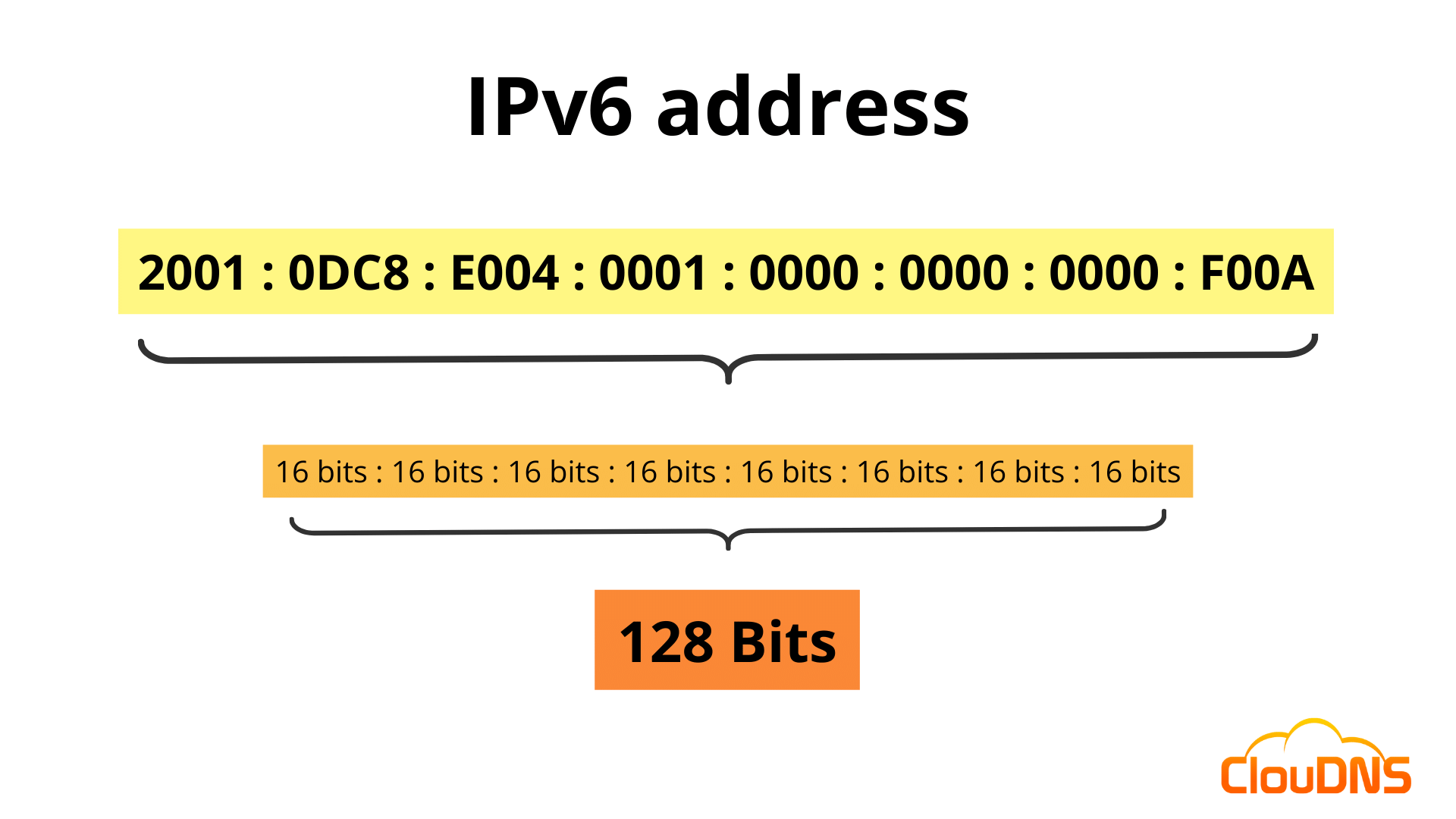
✍️ IPv6 Address Format (Easy)
🔹 How IPv6 Looks
2001:0db8:85a3:0000:0000:8a2e:0370:7334
📌 Key points:
2001:0db8:85a3:0000:0000:8a2e:0370:7334
📌 Key points:
- Written in hexadecimal (0–9, a–f)
- 8 groups (blocks)
- Each block = 16 bits
- Blocks separated by :
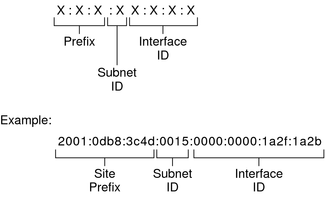
Basic IPv6 Address Structure
✂️ IPv6 Shortening Rules (VERY IMPORTANT)
Rule 1: Remove leading zeros
Rule 2: Replace continuous zeros with ::
↓
📌 :: can be used only once in an address
0db8 → db8Rule 2: Replace continuous zeros with ::
2001:0db8:0000:0000:0000:0000:0000:0001↓
2001:db8::1📌 :: can be used only once in an address
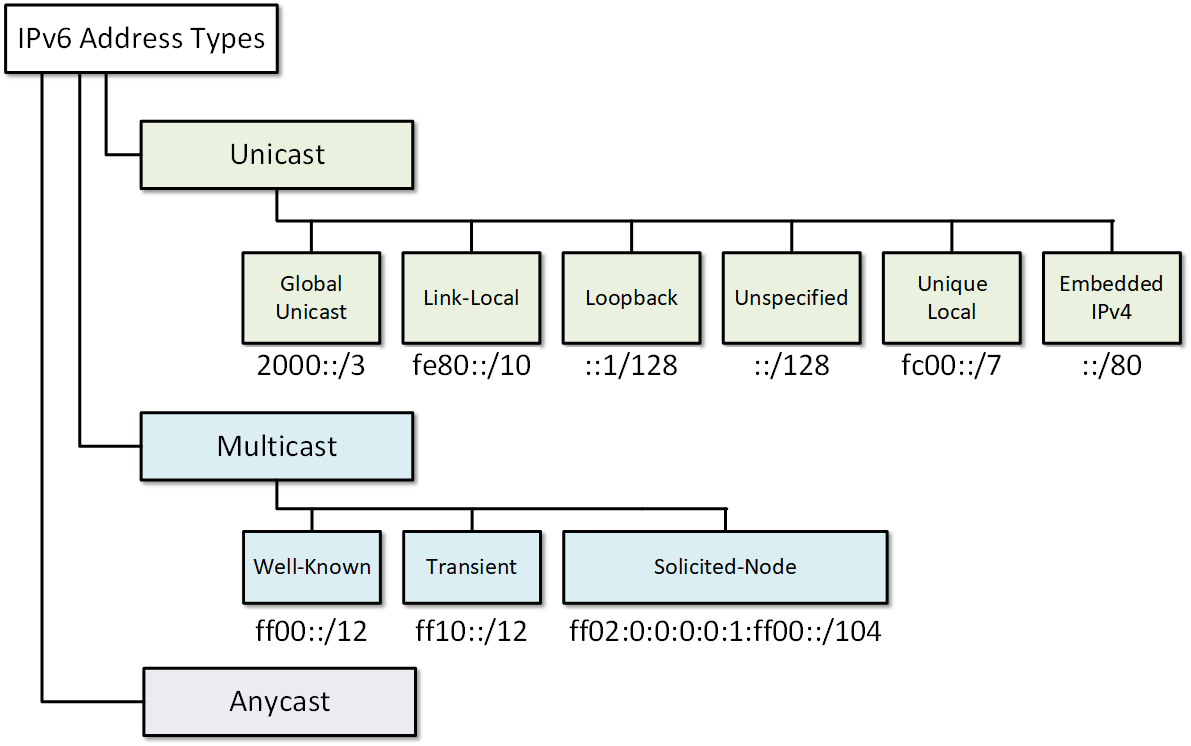
🧩 IPv6 Address Types (VERY IMPORTANT FOR CCST)
🟦 1️⃣ Unicast Address
📌 One-to-one communication
🧠 Meaning: One sender → One receiver
Common Unicast Types
2001:db8::10
👉 Similar to IPv4 public & private IP
🧠 Meaning: One sender → One receiver
Common Unicast Types
- Global Unicast → Public IPv6 (internet-routable)
- Link-Local → Local network only
2001:db8::10
👉 Similar to IPv4 public & private IP
🟩 2️⃣ Multicast Address
📌 One-to-many communication
🧠 Meaning: One sender → Multiple receivers
🧠 Example:
ff02::1
👉 Sends data to all devices in a group
📌 IPv6 uses multicast instead of broadcast
🧠 Meaning: One sender → Multiple receivers
🧠 Example:
ff02::1
👉 Sends data to all devices in a group
📌 IPv6 uses multicast instead of broadcast
🟨 3️⃣ Anycast Address
📌 One-to-nearest (best) receiver
🧠 Meaning:
🧠 Meaning:
- Same IPv6 address assigned to multiple devices
- Data goes to the closest one
- DNS servers
- CDN servers
IPv6 Address Types
❌ What About Broadcast?
🚫 IPv6 has NO broadcast
📌 Broadcast is replaced by multicast
📌 Broadcast is replaced by multicast
🧩 IPv6 Address Types (Summary Table)
| Type | Communication | Example Use |
|---|---|---|
| Unicast | One → One | Web browsing |
| Multicast | One → Many | Routing updates |
| Anycast | One → Nearest | DNS, CDN |
| Broadcast | ❌ Not used | Replaced by multicast |
📍 IPv6 Prefix & Prefix Notation (CIDR Style)
An IPv6 prefix tells which part of the address is the network.
📌 Similar to subnet mask in IPv4
📌 Uses slash notation
📌 Uses slash notation
🧠 Example:
2001:db8:abcd:0012::/64
👉 First 64 bits = Network
👉 Last 64 bits = Host
📌 /64 is the MOST COMMON prefix in IPv6
2001:db8:abcd:0012::/64
👉 First 64 bits = Network
👉 Last 64 bits = Host
📌 /64 is the MOST COMMON prefix in IPv6
Common IPv6 Prefix Lengths
📌 CCST Tip: If you see IPv6 → assume /64
| Prefix | Meaning | Usage |
|---|---|---|
| /64 | Standard subnet | LAN networks |
| /48 | Large organization | ISP allocation |
| /128 | Single device | Loopback |
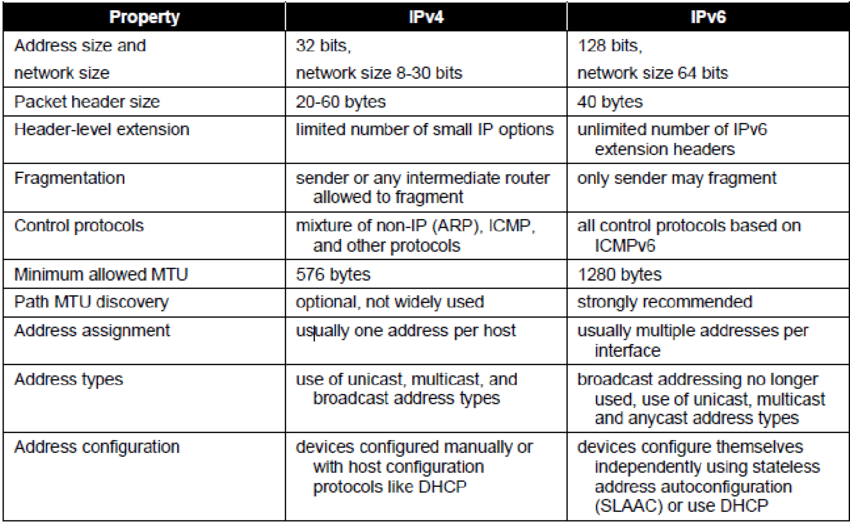
🧠 IPv4 vs IPv6 (Quick Comparison)
| Feature | IPv4 | IPv6 |
|---|---|---|
| Address size | 32-bit | 128-bit |
| Format | Decimal | Hexadecimal |
| NAT needed | ✅ Yes | ❌ No |
| Broadcast | ✅ Yes | ❌ No |
| Multicast | Limited | Built-in |
IPv4 vs IPv6 Comparison
🛠️ CCST Troubleshooting Examples
| Symptom | Likely Cause |
|---|---|
| Device has IPv6 but no internet | Gateway / prefix issue |
| Neighbor discovery fails | Link-local issue |
| Network flood | Wrong multicast config |
🧠 Memory Tricks (Exam Gold 🥇)
IPv6 = Big address
No broadcast
/64 is standard
:: = compressed zeros
Unicast, Multicast, Anycast
IPv6 = Big address
No broadcast
/64 is standard
:: = compressed zeros
Unicast, Multicast, Anycast